THE ALCHEMY OF TAROT
Concept & Study Guide
You do not need to memorize seventy-eight definitions in order to read tarot. All you have to do is understand how to notice.
Tarot is a language, yes. But the cards are not the thing you are interpreting. They are the medium.
You are the channel!
That distinction changes everything.

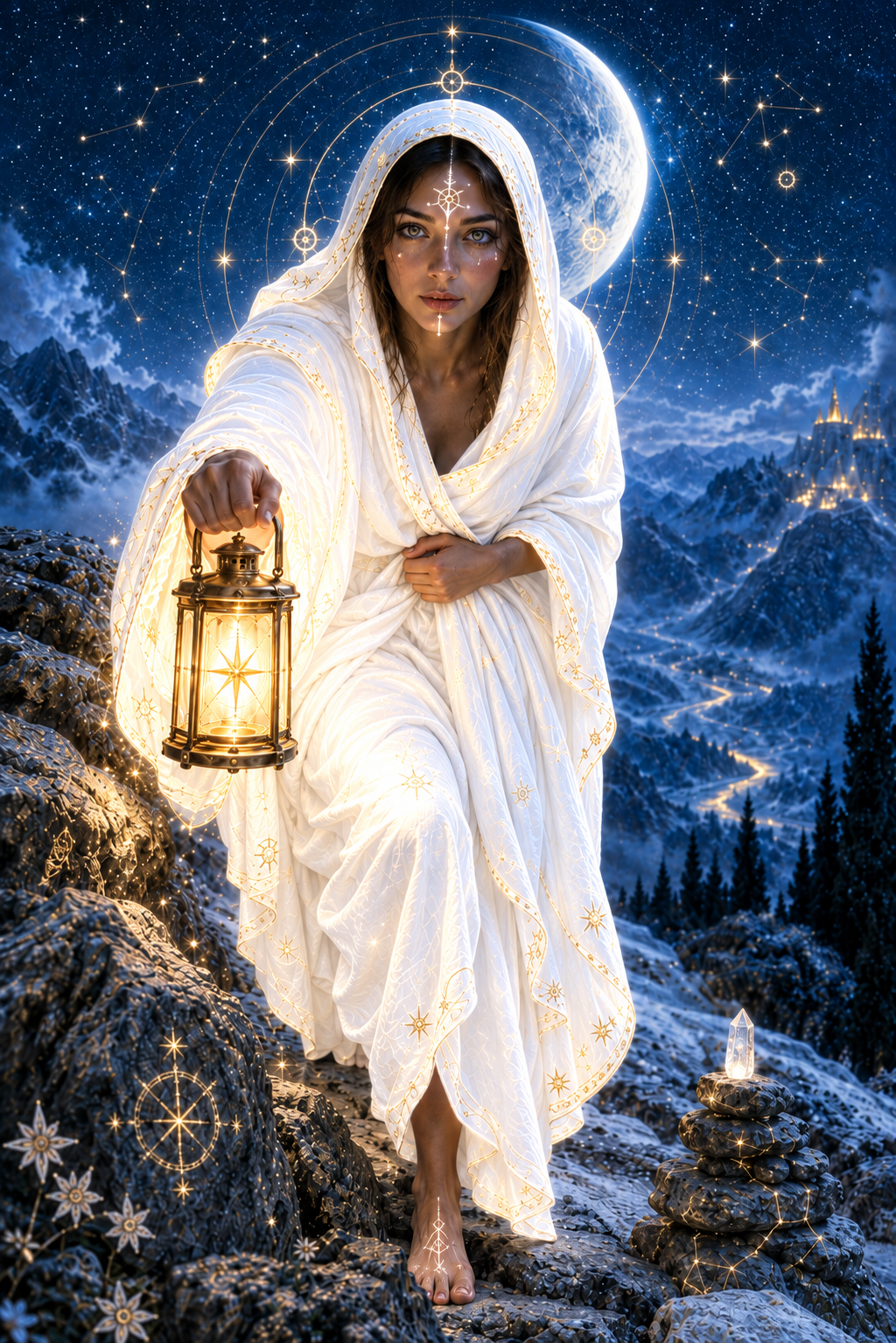
Hermit: The Light Bearer
Most people first pick up a Tarot deck, and imagine they have to memorize them all. Seventy-eight cards. Seventy-eight meanings. Symbols, Astrology, Numerology, Elemental correspondences. Court cards that may or may not be actual people. Spreads with twelve positions you are somehow supposed to remember while simultaneously trying to figure out whether the Seven of Cups means choices, confusion, fantasy, opportunity, anxiety, delusion or all of the above. And then we reverse them. No wonder people get overwhelmed.
The deck is a chirotic language that speaks in image. The Major Arcana was a teaching tool, to teach the brain to think in concepts, they are complex and evoke something within you. It is giving structure to what you are: seeing, feeling, sensing, hearing, remembering, associating, knowing….and these messages arrive concurrently within your current state. Those channels do not always arrive separately or announce themselves politely. They blend. Tarot gives them somewhere to land long enough for us to interpret what is happening.
I think of it like a calculator for long math. The calculator is fact checking what you already intuit. Trust that intuition, because it organizes the information in a way that is meaningful, but it doesn’t become the intelligence doing the work. So ignore everything you think you know about Tarot and take a walk with me.
More than three decades ago, I was where you’re at: curious, intimidated and surrounded by rules that made the whole thing feel bigger than it needed to be. I’d heard you have to be gifted your first deck, that it had to be Rider Waite, had to be covered in silk, charged by moonlight and then omg, the reversals again. Never read reversals. Use context instead. Just my opinion, Tarot According to Karma. Save yourself some time.
The problem is that the archetypes have changed, we have evolved and finer tools have risen to meet that need. More practitioners than ever are out there channeling, reading, creating. The problem is that the archetypes themselves are evolving and we can’t rely on the old archetypes (images) because the truth is, not one of us look at an old man in a robe and think wisdom. We think age. That is because for the period it was created robes were a statement of office. The archetype streams have evolved to reflect that and it is no longer sufficient.
So how do we read tarot with all these options? And where do we start. You start with picking your deck and I say…. Pick images you already have an inherent relationship with. If I tell you to put a Yoda on a Hierophant and you are a Star Wars fan, this goes much easier.
Listen, reverence and superstition are not the same thing. Tarot goes back further than the earliest references in the 1440s and it is not solely French. There are rabbit holes to go down, just ask me.
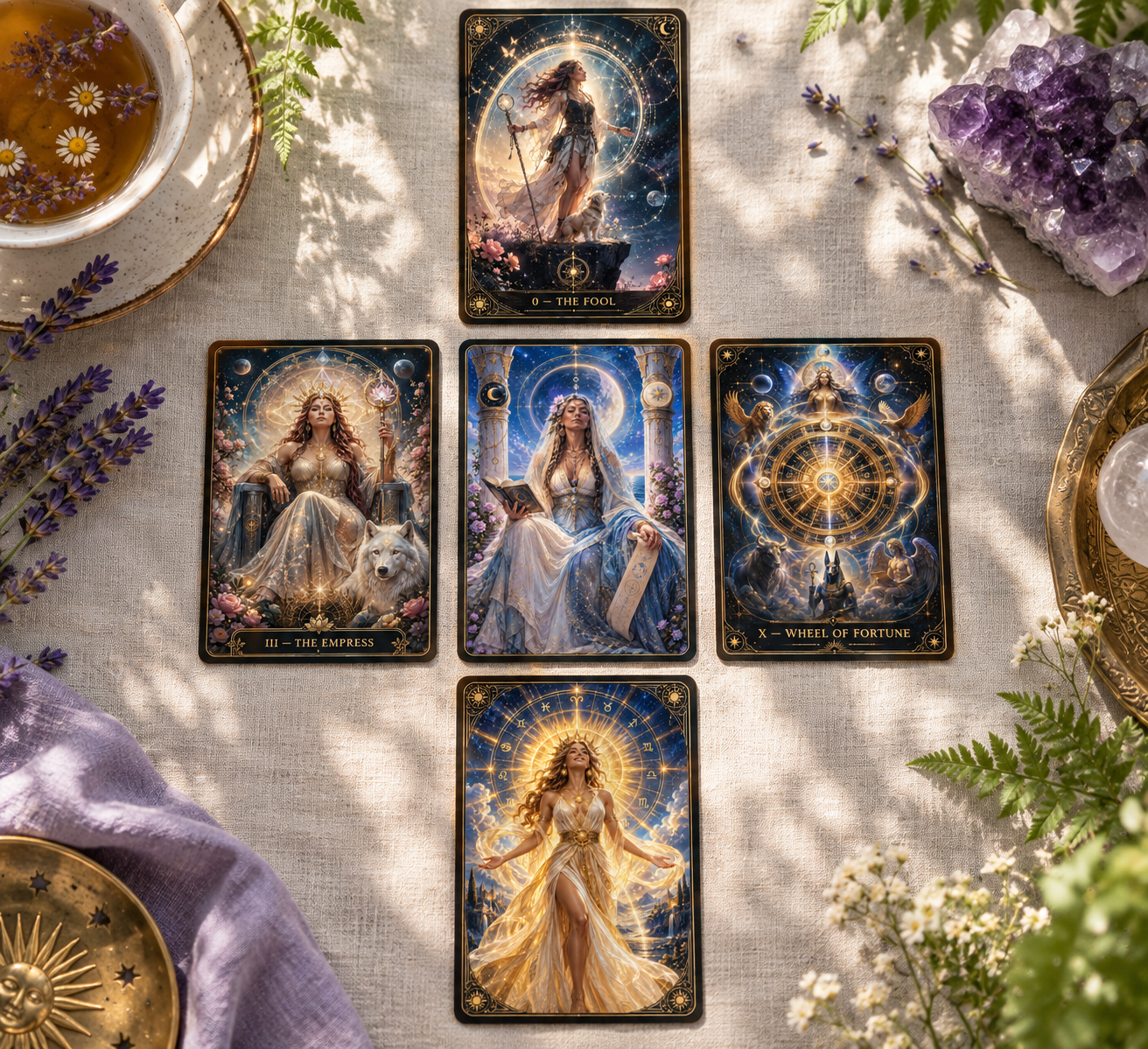
TAROT AND ORACLE: DIFFERENT CONTAINERS
There is something to be said here about the difference between Oracle Cards and the Tarot. Tarot has an established architecture. The Major Arcana, our archetypal core the rest hinge upon, and the Minor Arcana in 4 suits.
You can find art with everything from angels to fairies. Interpretation is the game but if you don’t comprehend the value system they are coming from it can be hard to make correlations. That is the case with Oracle decks. No two are the same. They can be 22 Major Arcana style, thematic, 36 card, 48, 56. It’s arbitrary. But with tarot we can still recognize the skeleton underneath it. No matter the art, every deck is structured the same with some minor additions like naming or themes. You are always going to get that 78 card structure.
Oracle has no required architecture. The creator decides the card count, categories, symbols, rules and vocabulary. That does not make oracle more intuitive or Tarot more intellectual. It is channeling in either case. We are sensing, associating, interpreting and translating information through a medium. The difference is the container. So this same teaching style applies, it’s archetypal recognition, understanding concepts through imagery. Like Jesus. The cross is literally two lines but we see it and we just know.
Tarot gives us a shared grammar that gives perception somewhere to stand.
The question I care most about is What is going to get you in closer relationship with your deck so you can get to using it sooner. How do you actually learn to read it? What you need is a map.
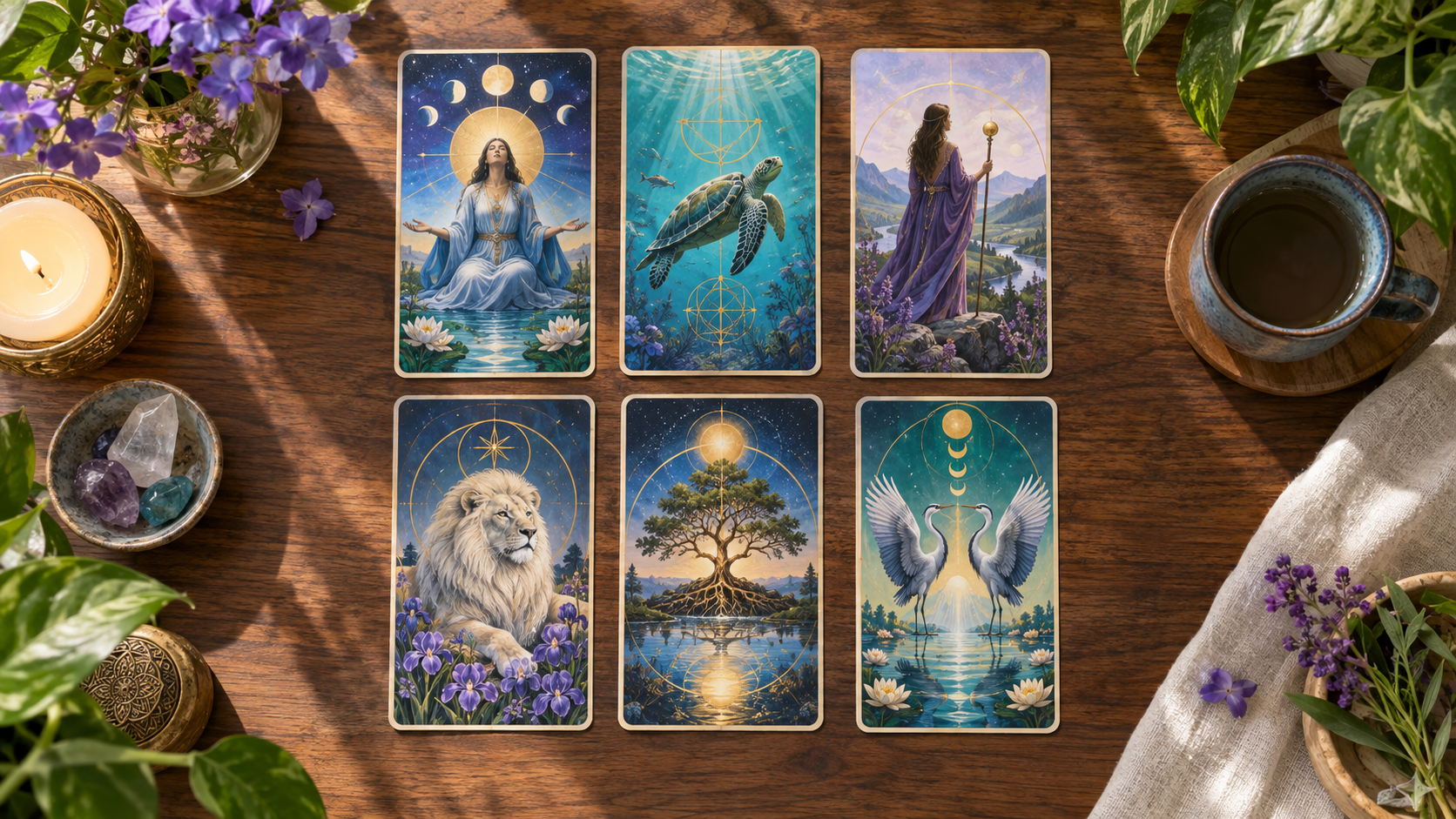
Simplify
Go get your deck and let’s organize it. Separate the cards into piles by suits:
- Major Arcana
- Cups
- Swords
- Pentacles
- Wands
You are going to study these systematically starting with the Major Arcana, this is your Codex. It holds the keys to all the other images in the deck. This is true no matter what deck you use. You will find some cards eerily similar and that is by design.
Now you have five study piles but we will only be working with the Major Arcana to start. Functionally, however, the deck is doing four different jobs:
The Majors are the mythic scale—the archetypal forces of consciousness. The Aces are the elemental intelligence before circumstance complicates it. The numbered Minors are the lived moods and situations through which that intelligence is tested.
The Courts are what that intelligence looks like when it becomes character, agency and maturity—how we conduct ourselves, wield what we have learned and direct it in the world.
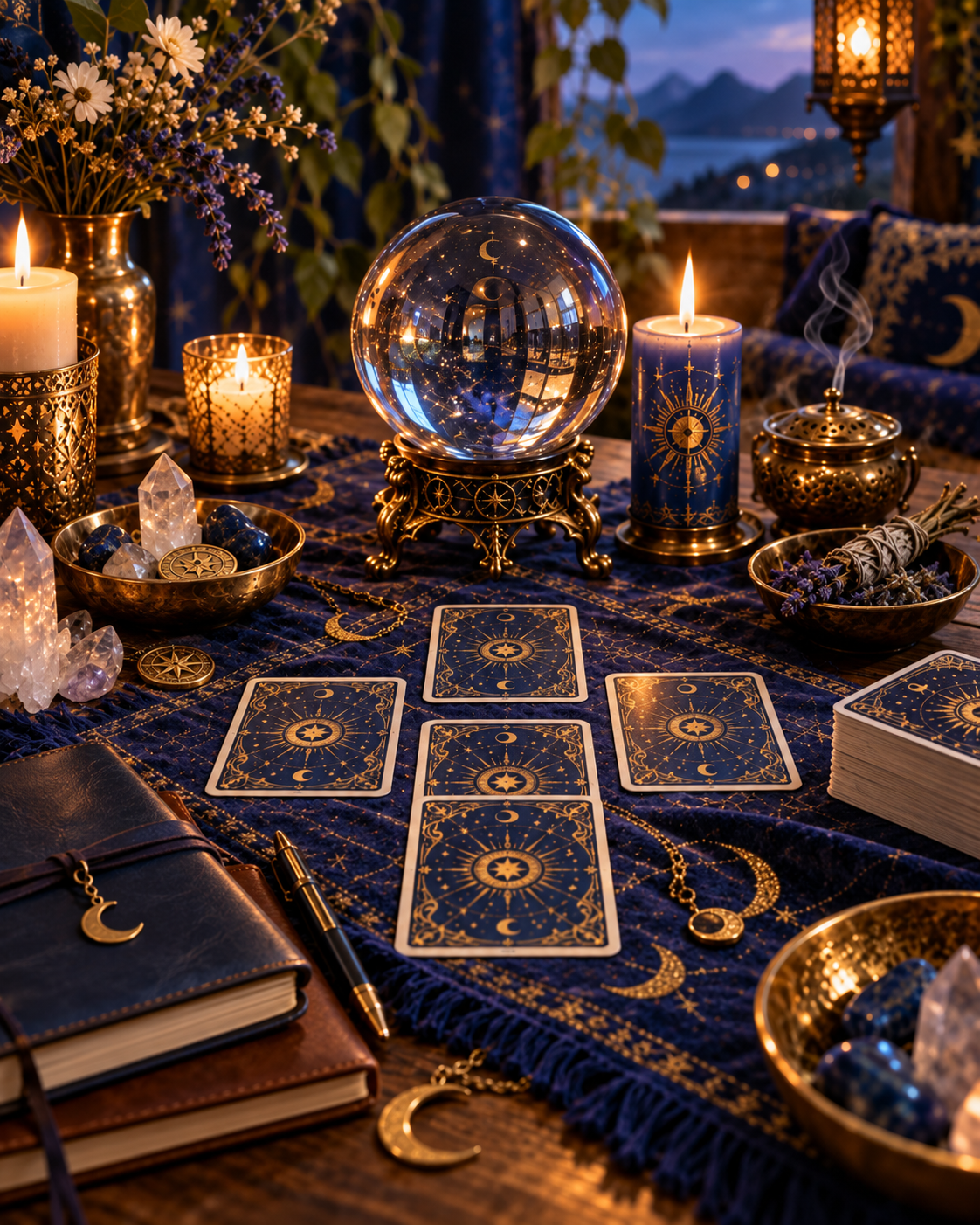
Right there, you have already made Tarot smaller without removing a single card. Instead of seventy-eight unrelated mysteries, you are looking at a structured language, a chirotic language, a language of symbols, that speaks to something other, like hieroglyphs or astrology. But all languages have grammar—a structure.
In very simple terms:
The suit tells you where the energy is operating. The number tells you how it is moving. The imagery tells you how this particular deck speaks. Context tells you what the sentence means.
This is where we begin.
ENTER THE REALM — STUDY THE MAJOR ARCANA
The Major Arcana will require disproportionate attention in the beginning but it will be worth it. These are the seeds. The Majors carry the largest archetypal imprint: creation, authority, initiation, desire, choice, sacrifice, collapse, death, hope, fear, revelation, completion. These are not merely card meanings; they are recognizable human patterns.
You already know them. You have been the Fool, at a crossroads, having to make a choice. You have met the Magician, the charismatic, charming one. You have surrendered like the Hanged Man and watched the Tower fall. You have had something die that absolutely had to die and cried like the Devil when we get twisted in the heavy stuff of life. The images in tarot are telling a story whose purpose is to evoke something within you. What is that thing? The archetypes are meant to be visceral.
Think about watching a movie. You recognize the hero, the villain, the lover, the mother, the father through what they do, what they want and what happens to them. You feel the role before anyone gives you its definition. Tarot gives us a spiritual setting for that recognition: we are the Fool moving through life, encountering these roles, lessons and thresholds, and sometimes embodying them ourselves. Follow the arc. Watch a character on television, think of someone you know, and ask which Arcana you recognize in what is unfolding. What did they do that brought that card to mind? That is recognition becoming a visceral imprint, something your intuition can return to with wicked precision later.
Don’t begin by asking, “What does this card mean?” You begin with your intuition and use it to your advantage and notice. Pick one Major Arcana card. Do not open the guidebook yet.
Ask yourself:
- What jumps out
- Notice the environment and posture
- Is it dominant or subtle
- How do you feel?
- What is strangely absent and loudly out front.
- What is their posture?
- Are they inward focused or outward? Happy or sad?
- What colors dominate the card?
- What is thematic?
- What does the setting tell me? Summer or fall, rich and vibrant, or muted and dark?
- What does this image remind me of? (this one especially and I’ll teach you a few tricks later, this one is important for association. All the information needed is provided. No more no less, take it in!)
- What did my body notice before my mind started defining it?
Write down your first impressions. Now read the artist’s description and compare. What did they emphasize that you did not notice? What did you notice that they did not mention? What changed once you had more information?
Then put the card away. You will revisit it later and when you look again you aren’t looking to “remember” you are looking to associate.
That second pass matters more than the first. I recommend getting a bound journal with blank pages and dedicate a page to each. Write down what you see and what the artist says they’re trying to show you. When you do that second pass you will circle the top 5 or top 10 things you noticed and imprint with that. Keep the meanings available as you practice and compare and see if those top 5 / top 10 move around as you get more comfortable with them.
Look. Associate. Compare. Return.
And return again and again. Make it part of your meditative or ritual practice. Pick one to meditate on and just see where it comes up in life. Who do you know is at what phase in the rotation? Give it room to impress itself upon your intuition. I think of the Major Arcana as the Mages, the Teachers. We enter with the Fool’s curiosity and cultivate the Hermit’s contemplation, letting study become part of the spiritual journey. Devote time to it. The Major Arcana are a major part of the study—it’s even in the name. Wink.
Repetition seats the archetype without turning the practice into rote memorization. You are not trying to memorize somebody else’s sentence. You are developing a relationship with the language.
THE ACES ARE ELEMENTAL
Pull out the four Aces and place them together. I read the Ace as concentrated elemental intelligence: the quality of the suit before life has had time to complicate it.
Water before the relationship, Air before the argument, Earth before the resource question and Fire before the action. An Ace often marks an opening, threshold, invitation, intensity, pivot or beginning, but remember: potential does not automatically mean outcome. A doorway is not the same thing as walking through it.
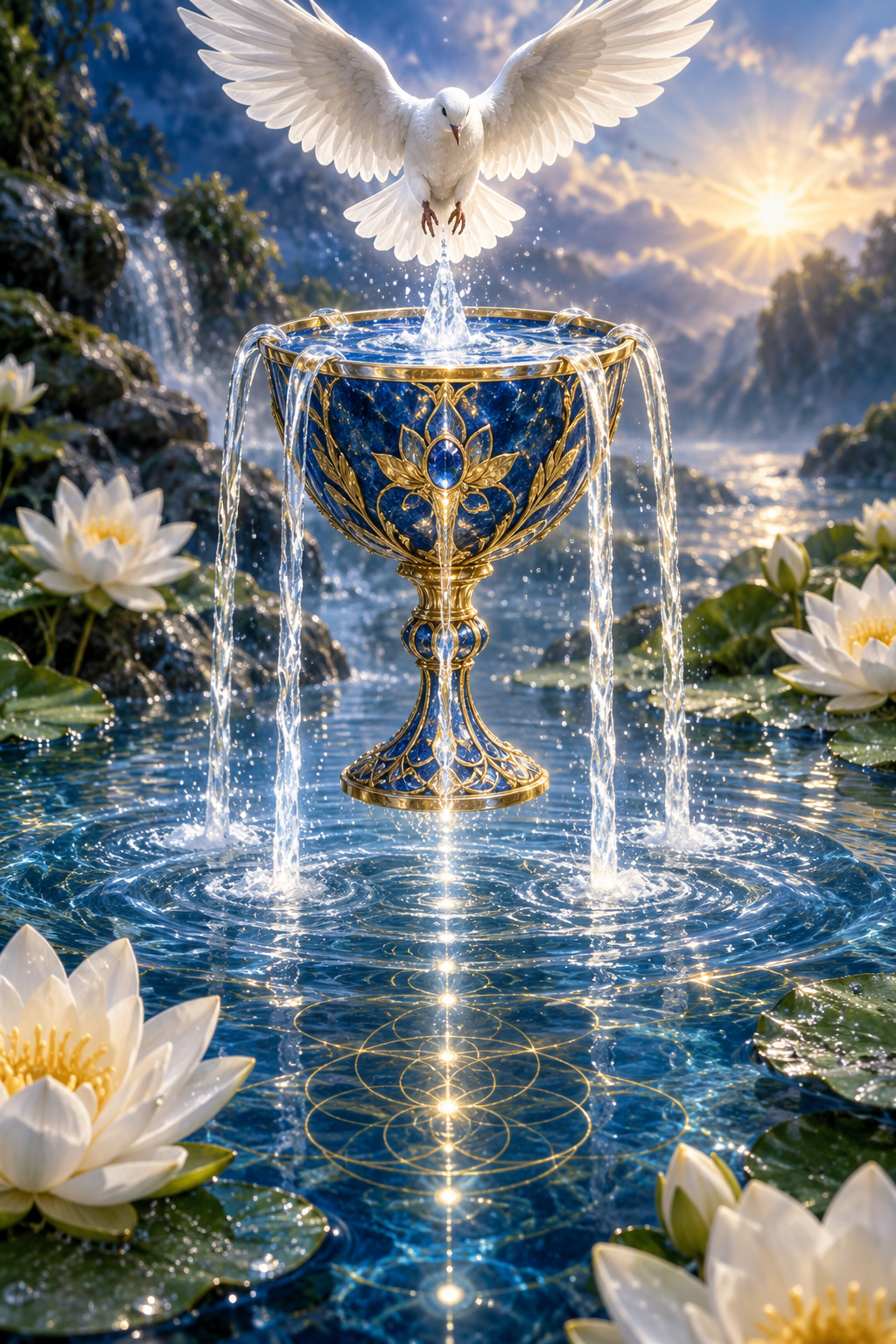

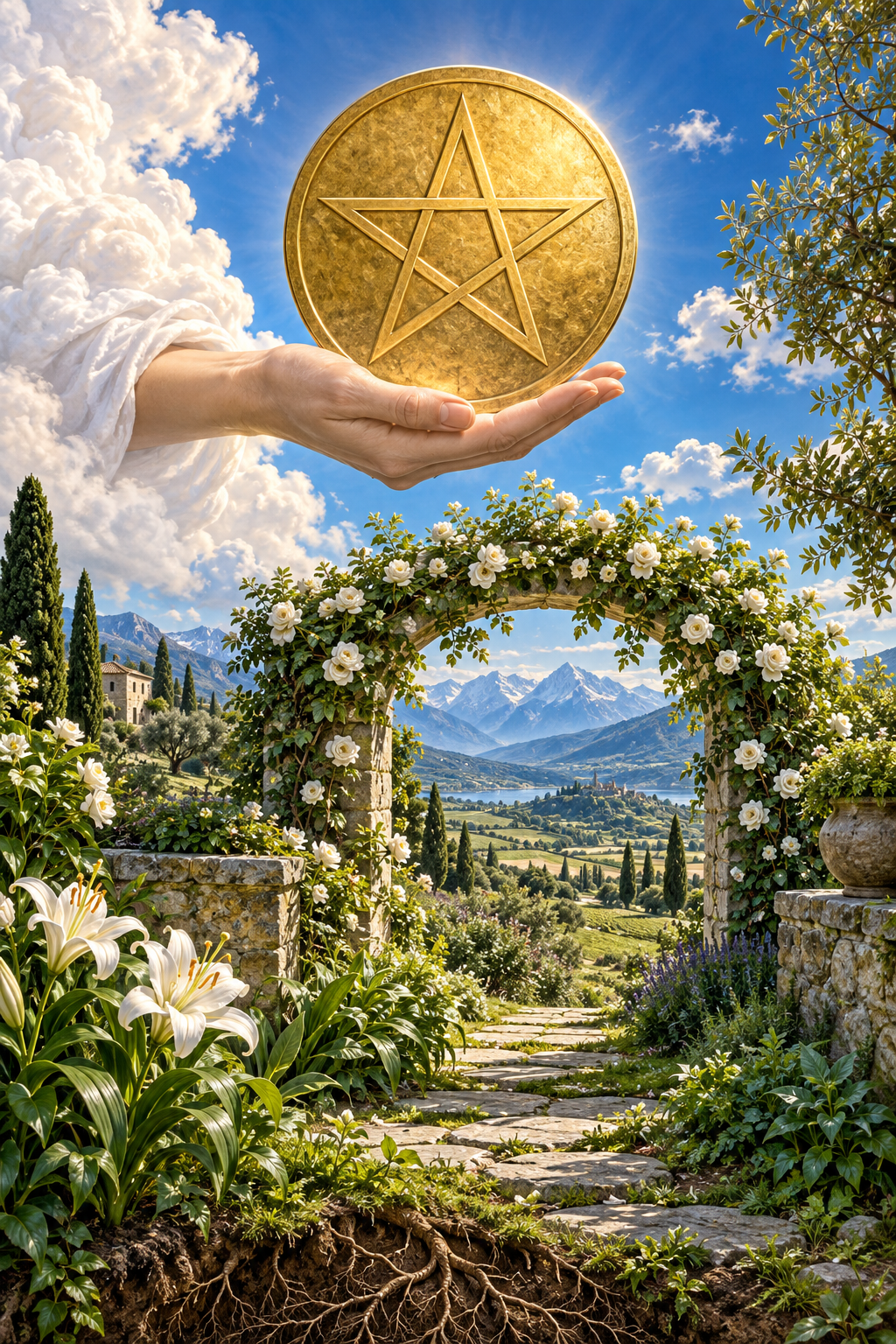

So when an Ace appears, ask:
- What is opening here?
- What quality is arriving at full strength?
- What could begin?
- What could become available?
- What does the surrounding context suggest will happen with it?
Compare the four Aces in your deck. Notice how your artist depicts pure Water, Air, Earth and Fire before the numbered story begins.
THE MINORS ARE THE LIVED FIELD
This is where most Tarot study becomes unnecessarily difficult. People often study one entire suit at a time and try to memorize. Two of Cups. Three of Cups…. Four of Cups. Even with the Majors, where I want you to devote the most study, familiarity comes from contemplation, association and return. Give the images time to become recognizable.
Now that you have studied the “world” in the Major Arcana, let’s see how they are represented. Numerology plays as big a role as symbolism, but that makes it easy. Compare the suits side by side. This is where separating the deck comes in.
Take your four Minor Arcana piles and put them in this order: Cups → Swords → Pentacles → Wands And compare the twos in sequence. Move through the deck and observe how we do partnerships and decisions and circumstance. The numbers will GIVE you the vibe.
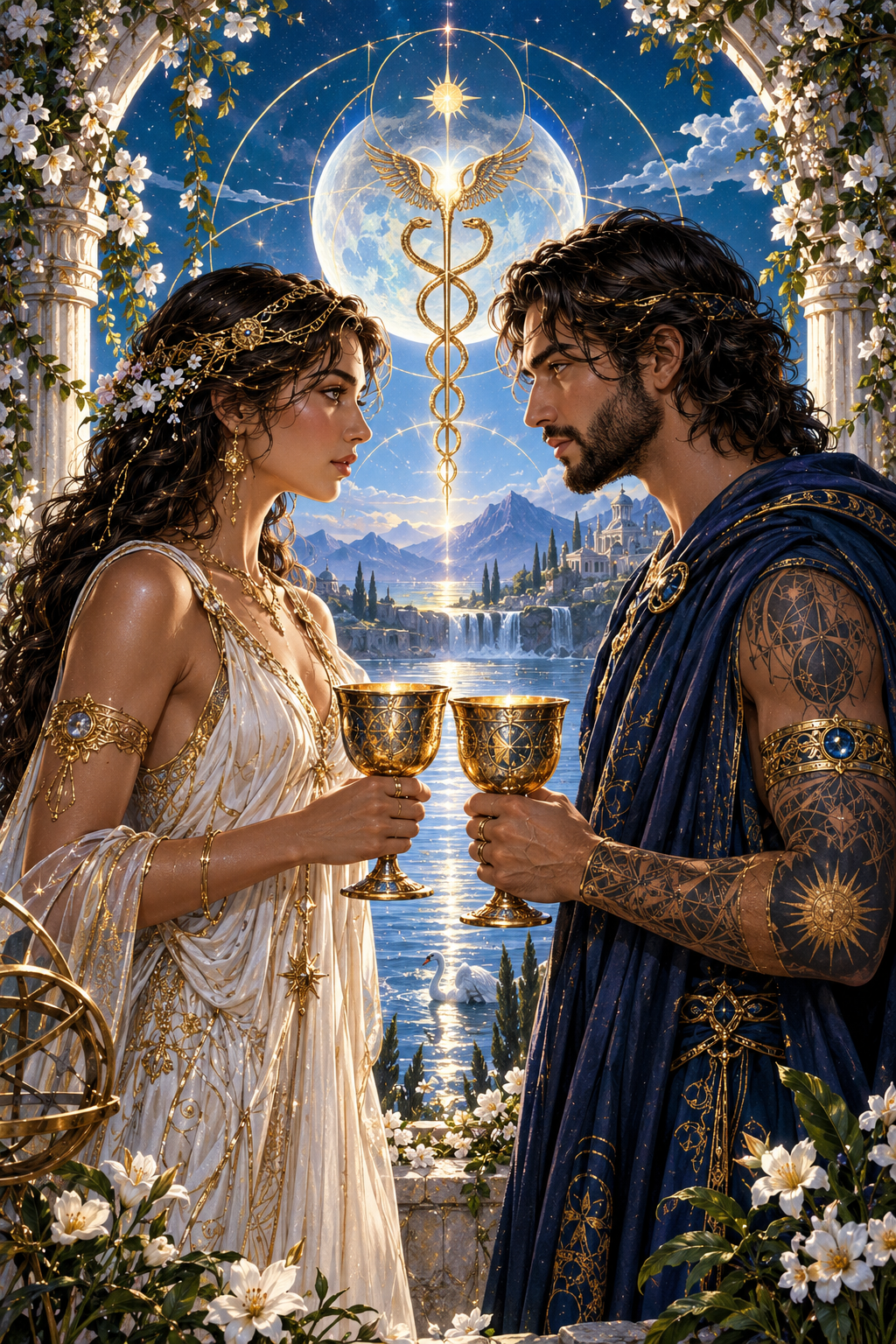
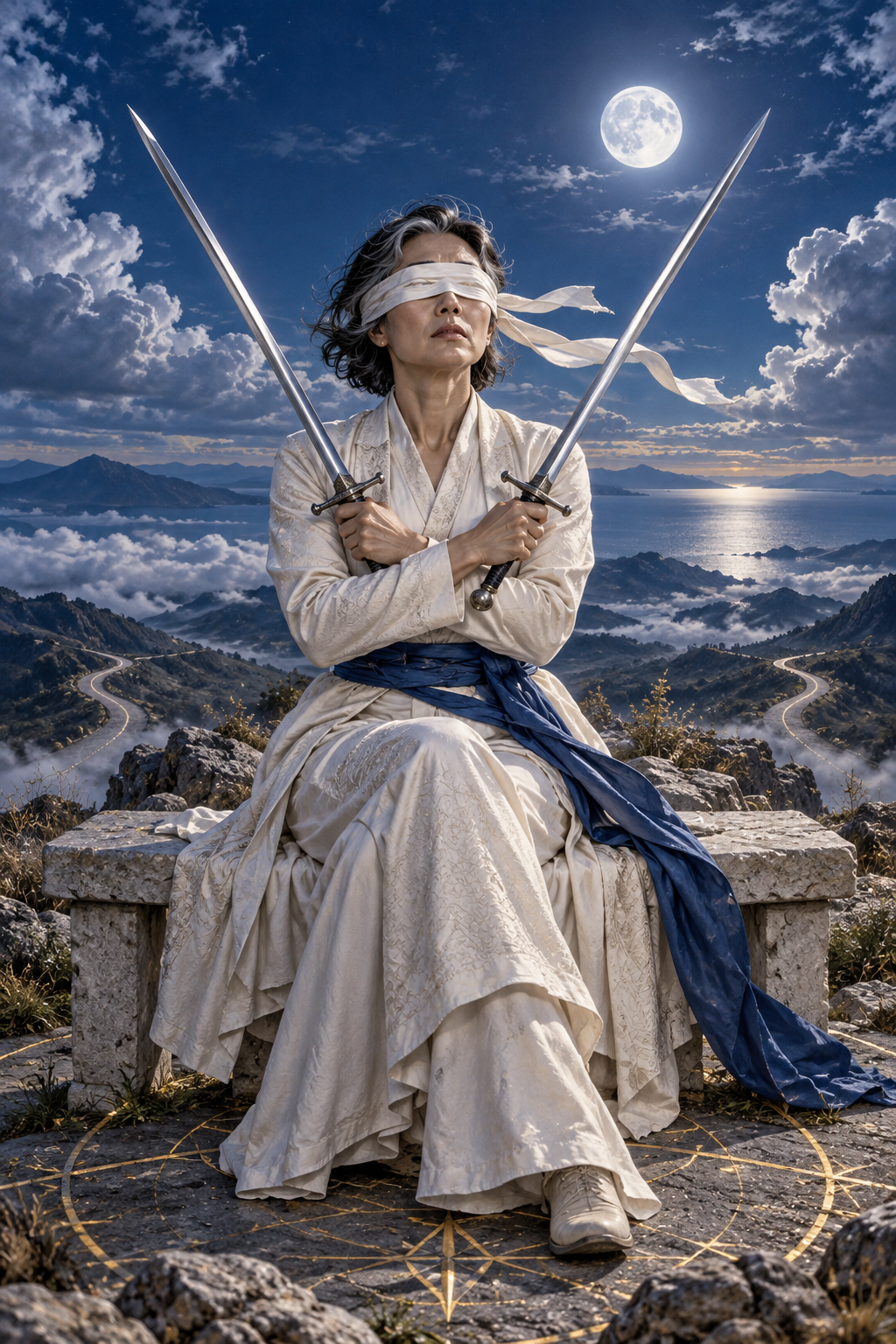

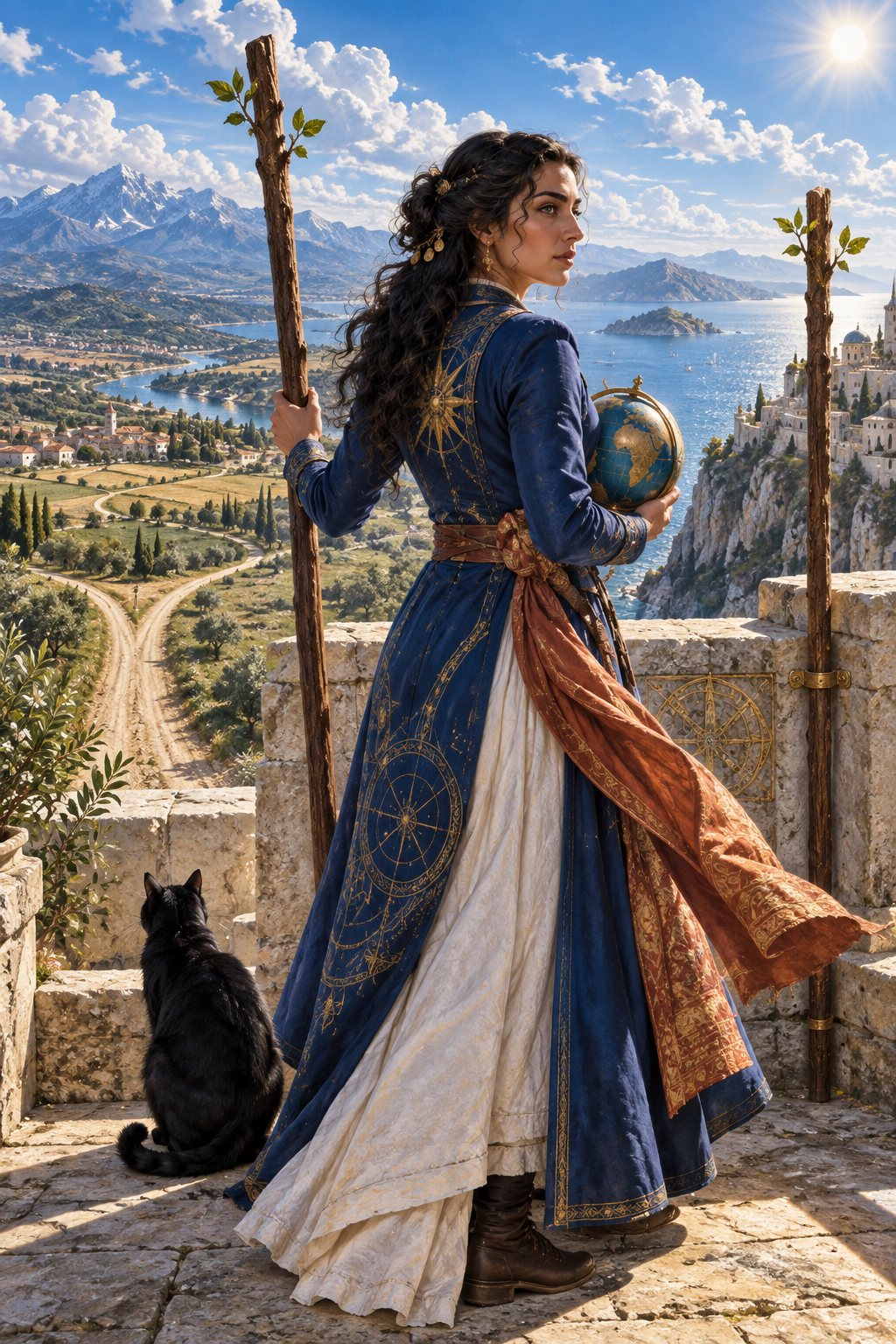
This is when the Minor Arcana begins to behave like a system instead of forty little islands. You begin seeing patterns, and then themes:
Choice. Expression. Foundation. Disruption. Restoration. Pressure. Movement. Accumulation. Consequence.
Same number. Different field.
A WORKING NUMBER MAP
This is the shorthand I use when comparing the numbered Minors.
- 2 — Choose / Relate
What is being paired, divided, exchanged, balanced or selected?
- 3 — Express
What is now being created, communicated, shared, witnessed or brought into relationship?
- 4 — Build / Hold Foundation
What is being stabilized, protected, contained, established or held?
- 5 — Disruption
Where has the pattern been disturbed? What happens when stability gets interrupted?
- 6 — Restore Support / Flow
How does the system recover, rebalance, receive help or begin moving again?
- 7 — Discern Under Pressure
What must be evaluated, defended, chosen or understood when things become more complicated?
- 8 — Movement / Momentum
What is moving? What is repeating? What has developed enough force to create direction?
- 9 — Accumulation Made Visible
What has built up enough to become undeniable? A resource? A burden? Mastery? Anxiety? Success? Fatigue?
- 10 — Culmination / Consequence
Where has the sequence arrived? And what does that completion now create?
That little map gives you a structural question to carry into each suit. Then you let the suit and imagery answer it.
THE FOUR FIELDS OF EXPERIENCE
The suits are our context. They tell you where something is operating.
CUPS — WATER
Emotion. Relationship. Receptivity. Feeling. Connection. Intimacy. The internal and relational world.
SWORDS — AIR
Thought. Language. Decision. Conflict. Discernment. Interpretation. Communication.
PENTACLES — EARTH
Body. Matter. Resources. Money. Work. Security. Cultivation. The tangible world.
WANDS — FIRE
Will. Creativity. Action. Desire. Work. Ambition. Direction. The impulse to move something into being.
Now go back to one of your number rows. Take the Four, for example. If Four is concerned with foundation, what happens when foundation moves through Water?
Through Air? Through Earth? Through Fire? The imagery will answer. And this is exactly why I want you using your own deck. Every deck has its own dialect and you are the translator, from emotion to articulation. Water through oceans, moons and vessels, rain, fish, tears, pearls or river systems. Wands can be aggressive and martial. Or fire, ecstatic, creative and sexual.
One artist may emphasize astrology because they speak that archetypal language and they want to infuse meaning at a specific spot. If you already know astrology or even a little, these are signposts. You will find everything from religious symbols, chakra symbols, plants and animals, sacred geometry, body language and scenarios.
Don’t ask only: “What does this card traditionally mean?” Also ask: “Why did this artist choose to say it this way?” That question will teach you an enormous amount.
COURTS WITHOUT THE GENDER CAGE
Court cards make a lot more sense when we stop requiring them to be four literal people wandering into every reading. A Queen doesn’t always mean a woman. A court card is simply how we “hold court” or conduct ourselves in different contexts.
They describe behavior, development, roles, stages, strategies or instructions.
Personally, I use them to tell me where someone is at developmentally. Are they mature or impulsive? A page or knight of cups will tell me they have some growing up to do, and a King will tell me that someone is moody.

PAGE BEGINS.
Newness. Innocence. First contact. Learning. Early development.

KNIGHT MOVES AND TESTS.
Pursuit. Experimentation. Variability. Change. Momentum. The Knight has more capacity than the Page, but not always more judgment.
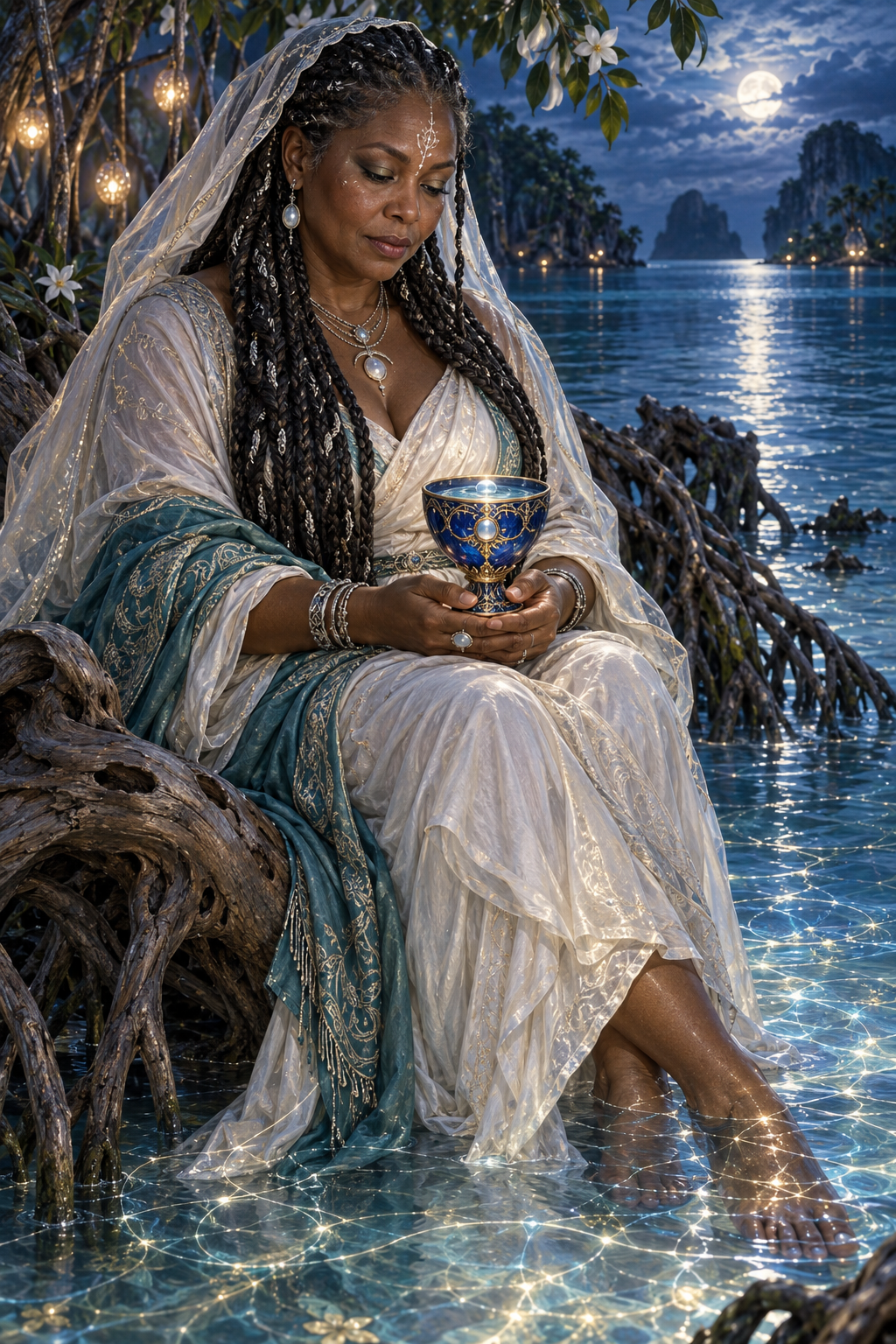
QUEEN EMBODIES INWARDLY.
How is this suit held inside the person? How has it become nervous system, values, instinct, self-management, gift or distortion?

KING DIRECTS OUTWARDLY.
What happens when this suit is given authority? How does it lead? Decide? Structure? Influence? Act?
Watch the maturation through your court cards and compare through the suits. Again: Same structural role, different field. You are teaching your eye to recognize pattern and your third eye to recognize association.
A FINELY TUNED INSTRUMENT
If you are the channel, then you are the instrument. The condition of the instrument matters. If you are going to channel, and that is what tarot is, understand that there can be some tolls. Your body is not in the way of psychic work. It is part of the receiving system.
This matters especially if you read through empathy or sensation. Hunger, exhaustion, pain, anxiety, attraction, anger and overstimulation all have voices. Some of them have megaphones. If your basic needs have to shout to get your attention, subtle information has to compete with the noise.
You don’t need to become perfectly regulated or honor every need; you just need to be hyper fixated on your states and come to know what is normal for you. If you know your baseline at all times and are aware of it, you notice immediately when something is new or different. Come to understand and interact with your inner voice in the most intimate way possible and it will pay off in spades. See what I did there?
Before reading I start with ceremony. Simple salt hand washing, a candle, some incense. A reminder that this is sacred work, that people are bringing me their big shit and I want to stay soft and open. Whatever it takes for me to be open and available, I do.
Before the reading, notice what is already there. During the reading, notice what changes. Then resist the urge to immediately explain it. Signal before story time.
If your chest tightens when a card lands, the first information is that your chest tightened. Interesting. Now look. What landed? What changed in the spread? Does something else corroborate it? What does the actual context support?
This is discernment. We aren’t making every sensation a keynote, it is just working with more precision. Take care of the instrument. Eat. Rest. Drink water. Know yourself well enough to recognize your own baseline so you can notice when something actually changes. And more importantly, clients can come in anxious or projecting. Make sure you have the bandwidth, my little empath.
IF A CARD IS A WORD A SPREAD IS A SENTENCE.
This may be the most important piece, because context is where Tarot stops being a dictionary. The F word is the best example: it needs context to be effective, or offensive. Put it inside a sentence or declaration and the meaning narrows with precision. Cards work in the same way. The metaphor is useful as long as we remember what the grammar is doing: structure helps organize the information; it is not the information itself.
Tarot “reading” is actually “interpretation”. You are still reading the field through the cards, not translating definitions. You are giving the definitions nuance.
Cups don’t automatically mean romance. It is emotion, the heart field. Even anger is unrequited love and this illustrates that. The Tower does not automatically mean disaster, but it does mean it sure feels like the world is falling apart. The Sun is not automatically good, we can burn up from exposure. A difficult card can assist, a traditionally positive card can warn. The question itself that the querent brings to the table changes the field.
The placement matters. The surrounding cards give context, above and below past or present and the center is the person, surrounded by all the things. Zoom out, zoom in. Constantly browse and fixate on what comes up and what’s thematic. Regardless of what the cards say, trust that first impression and SAY IT. Your first impression matters.
This is also why I do not believe reversals are mandatory. You absolutely can read them if they work for you, but I lean on context and that has done the heavy lifting because 150 meanings to memorize was beyond me. I don’t need to turn a card upside down merely to manufacture opposition; the spread is wearing it all over. Context will tell me how the card is functioning.
Instead of asking: “Is this card good or bad?” Ask: “What job is this card doing here?” That question will get you much farther.
THIS IS A SPIRITUAL PRACTICE
TAKE YOUR TIME
IMPRINT THE DECK:
SORT THE DECK and get familiar. Majors. Cups. Swords. Pentacles. Wands. Look through them in sequence without trying to interpret everything. Notice the visual vocabulary of your deck. Clock it.
DEVOTION – OPEN YOURSELF TO THE ARCANA
Study and study well. These are your keys, your Mages, your Teachers. Devote time to contemplation and meditation; give the images room to impress themselves upon your intuition.
Observe before reading the guidebook. Write what you see.
Then compare your impressions with the artist’s description, note your major imprint themes and clock that too. Follow the Arc: remember the hero, villain, lover, mother and father you recognize in stories. Notice those spiritual roles in the people, characters and experiences around you, and record what brought a particular Arcana to mind.
COMPARE the numerology in the minors COMPARE the Minor Arcana TO the Major Arcana and make associations within the symbol system.
REVIEW OVER TIME:
This is where the journal becomes a resource. If you circled a dozen words and some don’t seem to remain, pick some new ones or pare it down. It can be one word for now, deepen your practice later. Notice…
What stayed? What changed?
What do you recognize now that you missed the first time? Anything new? Thirty-six years later I still notice dope symbols as if they are new. Sometimes they pop, notice when!
Now start throwing down some cards. Use people you know so you can track accuracy and themes. Then translate what you are perceiving into one working interpretation. Write down what in the field and the images supports what you are saying. Come back to the reading later and see what proved useful, accurate, incomplete or completely wrong.
Yes, wrong. That matters too. Trust becomes useful when it can tolerate verification.
FOLLOW THE MAGES — THE MAJOR ARCANA ARE OUR TEACHERS
The goal of learning Tarot is not to become dependent on definitions, it is to excavate the meaning behind why we do what we do.
Study the structure, learn the grammar and observe before you explain; let it percolate. This takes time, and the field will get richer as you go. Practice on questions you can later verify, record your first impression before you edit it into something prettier, zoom in, zoom out, compare, and let your relationship with your deck become part of the education.
The more familiar you become with the architecture, the less frightened you become of cards you have not memorized. Because eventually you stop asking: “What am I supposed to remember?” And start asking: “What am I actually looking at?” That is Tarot literacy.
The deck is the tool.
YOU are the channel.

Take another look at the cards in front of you. There may be a hand you passed over, a figure looking toward someone you hadn’t noticed, a little patch of light that suddenly seems to be doing something. The image has been there the whole time. Give it another moment. See what opens.
This is the part I love. You spend a little time with an archetype and then find it walking around in your life. The Hermit turns up in a season when you need your own company. A conversation has the unmistakable charge of the Tower. Somebody does something so entirely Queen of Swords that you almost want to hand them the card. What you studied at the table begins meeting you in the world, and when you return to the deck, you bring that recognition with you. The language gets richer because you have lived a little more of it.
Tarot for me was like a second language. Astrology was not, but I had to study to find out. And even that study gave me associations I wouldn’t otherwise have made. One practice opens a door into another; a symbol you recognize here lights up something you’ve been wondering about over there. Follow what catches you. Give it some devotion. You are allowed to wander, to get something gloriously wrong, to come back three days later and realize the damn thing was showing you exactly what you couldn’t see yet.
I had to hunt for so many of these answers. That is why I want this table to feel generous. Bring the deck you love, the questions you have, the strange association that only makes sense to you. There is room for all of it. Keep your journal close and leave yourself a little space beside what you think you know. Something else always comes into view.
And when you put the cards away, notice what follows you out of the room. A color. A character. A question that has changed shape. Let it keep you company. Somewhere between the image and the life you are living, the conversation is already continuing.
Thank you for trusting me. I love having you at the table.

ALCHEMY OF TAROT · YOUR STUDY COMPANION
Keep this beside your deck
Choose a deck you want to return to, begin reading while you study, and let the relationships become familiar. This guide gives you a way to study the Majors, compare the numbered Minors, walk each suit, and notice how the Courts embody its energy.
Read it here whenever you need a reminder, or save the printable guide to keep with your cards. Move at a pace your life can hold; practice belongs alongside every stage.
Download the study guide (PDF)Open your independent study guide
A relationship with the deck
Here is how I advise an independent study: choose a deck that speaks to you and begin a relationship with it. Bring your curiosity, your associations, your questions, and the life you have already lived. You are learning to interpret energy through tarot, and your own capacity to notice is part of that study from the beginning.
The meaning is what we are looking for. Definitions give us something to study and return to, but the image is where the encounter begins. There is a whole inner world moving inside a card: something reaching, something receiving, something concealed, something ready to change. Sometimes you recognize that movement before you have the language to explain it. Stay there long enough to notice what has your attention.
1. Choose the deck you want to return to
Your deck does not have to be Rider–Waite–Smith, and nobody has to give it to you. Start with the cards already in your hands, or choose a deck whose visual language makes you curious enough to keep looking.
Some shops have sample decks you can handle, even when the decks for sale are sealed. Online, browse the artwork and notice what you keep coming back to. You may discover that you have saved the same deck twice. There is information in that repetition. Before buying, look for images of the whole deck, including the numbered Minors and the Courts, so you can see whether the relationship continues beyond the cover and a few beautiful Majors. Make sure you are choosing a tarot deck if tarot is what you intend to study.
I think of this as activating your own cellular programming: waking the inner language of recognition you already carry. A story, a character, a memory, or a symbol can open a door. If Yoda brings the wise teacher to life for you, use that association. Notice what he helps you recognize in the card, then return to the image and see what else is there. If an association is meaningful and adds depth, use it.
2. Learn to see the relationships
A symbol does not arrive alone. It lives in a posture, a landscape, a gesture, a relationship. A bird, a cage, and a reaching hand tell a story together that the phrase “bird equals spirit” cannot hold by itself. Is the hand opening the cage, reaching into it, or keeping the bird inside? Are the wings folded or released? Where is the movement, and what is responding to it?
Look at what the figures are doing with what they hold. Sharing, enclosing, receiving, grasping, and releasing tell you how the energy is being expressed. A pleasant face can be holding something too tightly; a frightening image can reveal the moment something begins to loosen. Notice what moves inward or outward, what is illuminated or hidden, and what feels hopeful or ominous. Let those impressions become questions you explore in context.
Other symbolic languages can deepen this conversation. An astrological association, a number, or a familiar myth may reveal another layer. A correspondence opens a door between two languages; it becomes restrictive when we insist that every word in one must have exactly one equivalent in the other. Allow the connection to teach you something without forcing the systems to become identical.
3. Begin reading while you study
Begin throwing spreads right away. You do not have to finish memorizing the deck before you are allowed to listen. Keep the spread simple enough that you can follow what is happening, let your intuition take the wheel, and put words to what you notice. Then study the cards and compare.
Practice with people you know who are willing to participate. Familiar circumstances give you something concrete to compare with your impressions, but be honest about what you already knew and what you noticed through the reading. Knowing someone’s story can help you find your bearings; it can also steer what you expect to see. The point is to become better acquainted with your compass.
4. Read the ecology of the spread
Before you go card by card, take in the whole field. Whatever the number of cards, glance at the spread and notice its tone. Where is there movement, tension, stillness, repetition? Where are the Majors, and what is happening around them? Sometimes you can see that things are FUBAR before you can explain each piece. Clock it, then slow down and look at what gave you that impression.
Notice the direction of the story. A spread that begins with The Tower and moves toward The World has a different progression from one that begins with The World and moves toward The Tower. The surrounding cards and the context help you understand what that movement means. Look for what is developing, what is repeating, and where the energy appears to open or contract.
Now walk through the cards as a sentence. Let one image speak to the next. Notice which card you keep coming back to; it may be a Major or a Minor. That recurring pull can identify a focus worth exploring. A designated center card, a position representing the querent—the person receiving the reading—or a prominent Major may also give you an entry point. Follow the relationship that makes the spread more legible.
5. Make room for the guidance
A general spread gives both you and the person receiving the reading room to see the wider picture. People often arrive fixed on a person of interest or a question they want answered immediately. Their concern matters, but it may be only one part of what is asking for attention. Give yourself enough perspective to see the environment around it.
Read what you see, trust yourself enough to name it, and remain open to clarification. Let the person’s questions inform the conversation without allowing a hoped-for answer to dictate the reading. Guidance gives them more room to understand their circumstances and choose how they will respond.
You are going to have to get comfortable with the tricky subjects, too. There is a certain kind of bravery in sitting with someone in their Tower moments with the Devil on their back. You do not have to rush them out of the discomfort or make the imagery more frightening than it is. You do have to be present, clear, and careful with what you say. People come to this work with their most vulnerable material. This is stewardship and sacred work, and it is our duty to treat it with reverence.
6. Give your independent study a rhythm
Move through these studies at a pace your life can hold. The time frame depends on the time you have to give, and practice belongs alongside every stage. You can return to the same cards repeatedly and discover more because you have changed, your attention has changed, or the context has given you something new to see.
Study the Major Arcana
Give the Majors your devotion and study them well. They are the mythic scale of the deck: the archetypal forces of consciousness. Spend time with each image, its symbols, and the relationships within it. Notice what you recognize immediately, what you resist, and what remains mysterious. Then look at the Majors together and consider how the journey changes from one encounter to the next.
Compare the numbered Minors across the suits
Lay out the Twos together, then the Threes, and continue through the Tens. Look for a shared numerical pattern and notice how differently it appears in each suit. What does the number help you recognize? What does the element change? Record the similarities and the differences so that numerology becomes something you can see working through the images.
Walk each suit from Ace to King
Now gather one complete suit and follow it from its Ace through the numbered cards and into the Courts. Begin with the Ace as the elemental intelligence before circumstance complicates it. Watch that intelligence enter the lived moods and situations of the numbered Minors, then notice how it becomes character, agency, and maturity in the Courts. Repeat the walk with each suit and compare the ways its energy develops.
Notice the embodiment of the Courts
Spend time comparing the Pages, Knights, Queens, and Kings. Look at how each figure holds, approaches, or uses the suit’s energy. What changes in posture, attention, movement, and relationship? Then compare the same Court across the four suits. You are studying different ways of conducting ourselves and wielding what we have learned.
Practice, reflect, return
Keep reading throughout your study. After a spread, record what caught your attention, what you said, what the context clarified, and what you want to revisit. Bring those observations back to the cards. The study feeds the practice, and the practice gives the study somewhere to live.